
Five Misconceptions About Custom OFCI Equipment
Anderson Hungria is the Head of Product at NGEN, with over 20 years of product development and manufacturing experience in the mission critical space.
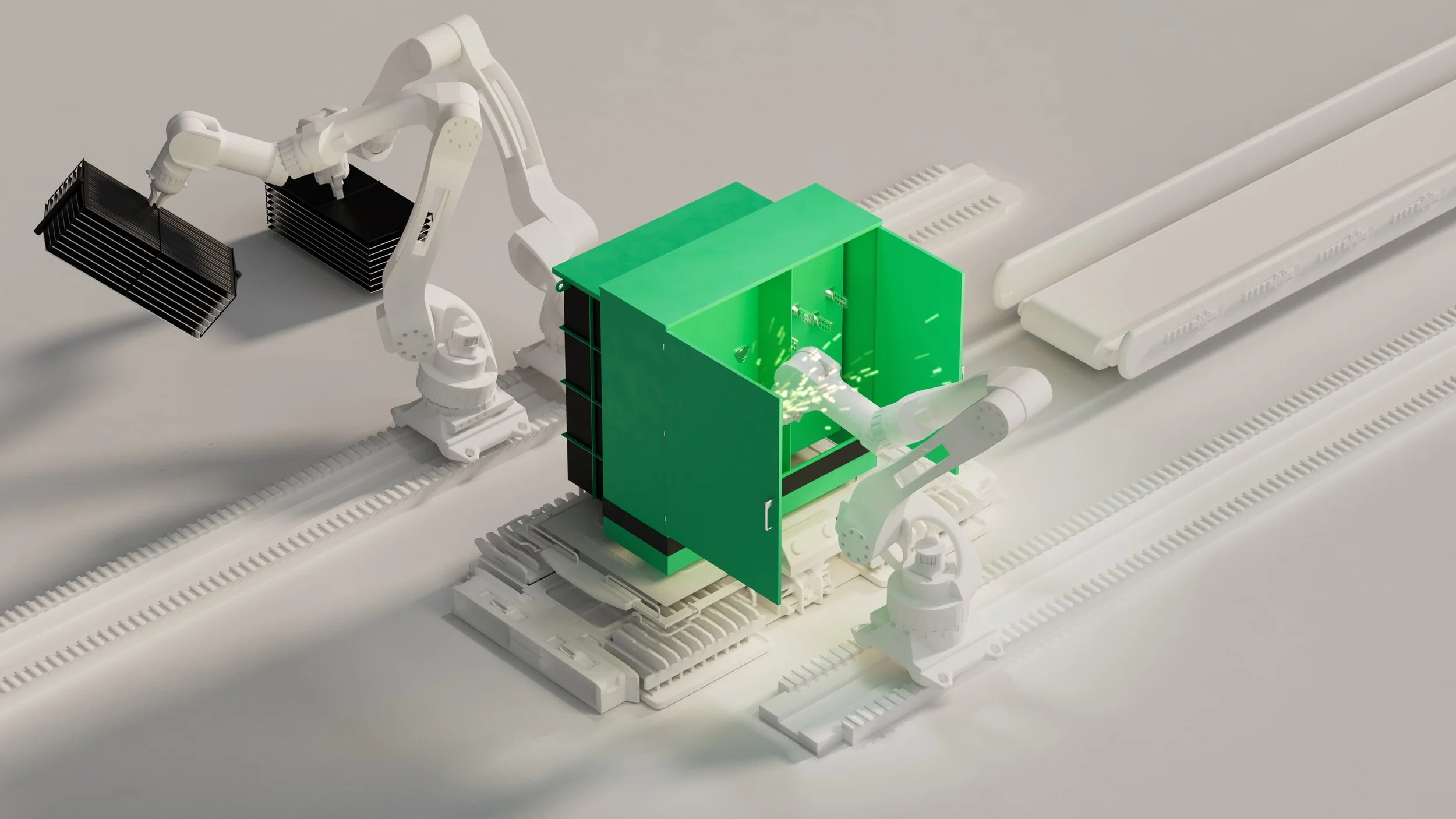
As buildouts accelerate, AI infrastructure demand is reshaping timelines across the power and cooling supply chain. Standard product lead times are no longer predictable under these new market conditions. Despite this shift, many developers still default to off-the-shelf equipment based on long-held assumptions about custom-engineered options: that they cost more, take longer to receive, and introduce operational risk. Those assumptions are outdated. Under today's supply conditions, custom equipment, when supported by the right engineering and lifecycle partner, can often provide a faster path to deployment than standard alternatives.
Why Off-the-Shelf Is Not Always Faster
Standard products can carry extremely long lead times, with Tier-1 OEMs often taking 6-24 months to deliver equipment. Simultaneously, hyperscalers and neocloud providers are reserving manufacturing capacity years in advance, intensifying competition across supply chains that are already strained.
For developers working under compressed deployment schedules, waiting on heavily backlogged standard equipment can delay broader commissioning and go-live timelines. As standard equipment backlogs continue to grow, custom-engineered equipment is becoming a practical strategy for reducing lead times and securing available production capacity. Before we outline the benefits of custom-engineered products, let’s first dispel some ingrained assumptions.
Common Misconceptions About Custom Equipment
Misconception #1: Custom Equipment Always Means Longer Lead Times
Despite these changing market conditions, many developers still associate custom equipment with longer lead times. In the past, that may have been true. Customization simply added an additional step in the process. But now, manufacturing capacity is the constraint. As standard equipment lead times expand, the equation changes. Today, it’s possible to benefit from customization while also taking advantage of available capacity and accelerating project timelines.
Misconception #2: Custom Equipment Costs More
Most developers assume custom-engineered equipment automatically comes with a pricing premium. However, constrained manufacturing capacity within traditional supply channels can drive up both lead time and price, not to mention the cost of project delays. In many cases, qualified custom manufacturers with available capacity can provide a faster and more cost-effective path to deployment.
Misconception #3: Custom Equipment Doesn’t Scale
Custom engineering is often viewed as a one-time exercise that doesn’t scale. However, it can actually become the foundation of a repeatable product line tailored to a customer’s deployment requirements, helping improve project timelines, equipment delivery phasing, and long-term supply predictability. NGEN supports one-off builds when developers need to fill a gap, repeatable product lines when they want consistency, and full campus pipelines when planning multi-phase deployments.
Misconception #4: Custom Equipment is Harder to Support
Custom equipment is usually perceived as more difficult to support operationally, particularly around startup services, commissioning, warranty coverage, field support, and spare parts availability. That concern is understandable, and often warranted, but NGEN’s full-lifecycle accountability model gives developers the support framework they expect from a Tier-1 OEM without sacrificing the benefits of customized infrastructure.
Misconception #5: Custom Equipment Creates Deployment Risk
Many developers worry that custom equipment will hit certification delays or arrive with documentation gaps that stall commissioning. The risk is valid, but it typically results from human errors or omissions in the supply chain, not whether the equipment is custom or standard. Custom equipment built with proper certification planning, and structured submittals, installation manuals, and commissioning documentation, can pass review just as efficiently as off-the-shelf alternatives. What separates a smooth commissioning process from a stalled one is the discipline of the partner, not the source of the equipment.
While these misconceptions continue to influence buying decisions, they no longer align with current market realities. Success depends on the partner's ability to guide projects from design through deployment with the expertise, oversight, and coordination needed to keep schedules on track.
How U.S.-Based Engineering Bridges Manufacturing and Deployment
Custom manufacturing alone does not guarantee deployment readiness. Engineering oversight aligns equipment designs, documentation, certifications, and installation requirements with the demands of mission-critical environments. The NGEN engineering team is involved early in the project lifecycle, often during schematic design, helping customers evaluate equipment options and align specifications with broader project goals. That engineering engagement continues well beyond procurement. As project requirements evolve during construction, our engineers remain engaged, helping customers adapt equipment selections, manage changes, and avoid downstream delays.
Beyond equipment design, NGEN provides local boots-on-the-ground expertise, including data center project requirements, logistics coordination, and regulatory knowledge. The expertise of our team is informed by lessons learned from previous deployments, helping customers identify potential issues before they impact project schedules. This approach helps developers accelerate deployment, streamline delivery, and reduce risk while maintaining consistency across documentation, certification, installation, and commissioning.
Certification as a Coordinated Process
Certification is often perceived as a major drawback of custom equipment. Off-the-shelf products arrive with complete paperwork, so developers understandably prefer not to inherit a compliance workstream if they don’t have to.
That preference no longer needs to shape procurement decisions. When certification is treated as an engineering discipline coordinated alongside design and manufacturing, it stops influencing the delivery timeline. Testing is coordinated while equipment is being built. Documentation is compiled as engineering decisions are made. By the time equipment is ready to ship, certification is complete or in its final stages.
One issue that frequently creates delays occurs at the system level. Custom equipment often arrives on site with each individual component correctly listed but never tested as an assembled unit for its intended use case. The mismatch surfaces during commissioning, and the last-minute testing pushes both schedules and budgets. Coordinating certification during design ensures the system-level listing is in place before the equipment ships, not scrambled for after it arrives.
That’s how NGEN operates. Every product we deliver is code-compliant and listed by a recognized NRTL, and the certification workstream is planned into the schedule from the start. This is what allows us to deliver custom equipment within 6-9 months while standard off-the-shelf alternatives often take 14 months or longer due to manufacturing backlogs.
Documentation and Visibility Keep Deployments on Schedule
Custom-engineered equipment is sometimes seen as too complex for field technicians, which raises concerns about deployment risk. That risk decreases when the equipment is designed around the people who install it. NGEN builds technician-friendly designs and backs them with visibility into the manufacturing process, including manufacturing oversight and factory witness testing, so quality and schedule stay predictable well before equipment reaches the site.
Most of the risk on site has less to do with the equipment than with the documentation behind it. Construction and commissioning teams need clear, accurate documentation they can work from, and that is what NGEN provides. When the documentation is consistent, installation sequences cleanly, commissioning stays coordinated, and problems get resolved quickly instead of stalling the schedule. Vetted manufacturing partners and in-house engineering oversight maintains consistency throughout the project.

Where Capacity Meets Capability
For developers under compressed deployment schedules, the question is no longer whether custom equipment is viable. It's whether their partner can combine manufacturing capacity with the engineering oversight, certification coordination, and documentation discipline that mission-critical deployments require.
NGEN was built to be that partner.
Interested in NGEN’s custom OFCI equipment? Check out our Technical Specs Overview