
Short answer: yes and no. And for many projects, the answer is somewhere in between. NGEN's Head of Product, Anderson Hungria, puts the question to UPS Product Manager, Antonio Porto.

At October's OCP Global Summit, the 800 VDC sidecar was "the star of the show," according to Dell'Oro Group's Inside OCP Global Summit 2026 recap. For anyone specifying power equipment right now, that raises a practical question about the UPS they are about to order. For the first instalment of our Meet the Experts series, Anderson and Antonio tackle the question head on.
Anderson: Say I'm planning to deploy 800 VDC racks. Should I still be looking at a traditional 480 V AC UPS?
Antonio: If you're already building today, yes. If you're still in the design stage, that's when you start looking at different products and a different architecture.
Anderson: Where's the line between those two?
Antonio: Roughly 2028. If you're in the early stages of a data center that starts construction around then, you should be thinking about this very seriously. If your equipment is being delivered in the short term, it doesn’t change the UPS you buy.
Anderson: So how do I feed an 800 VDC rack when my UPS is at 480 V?
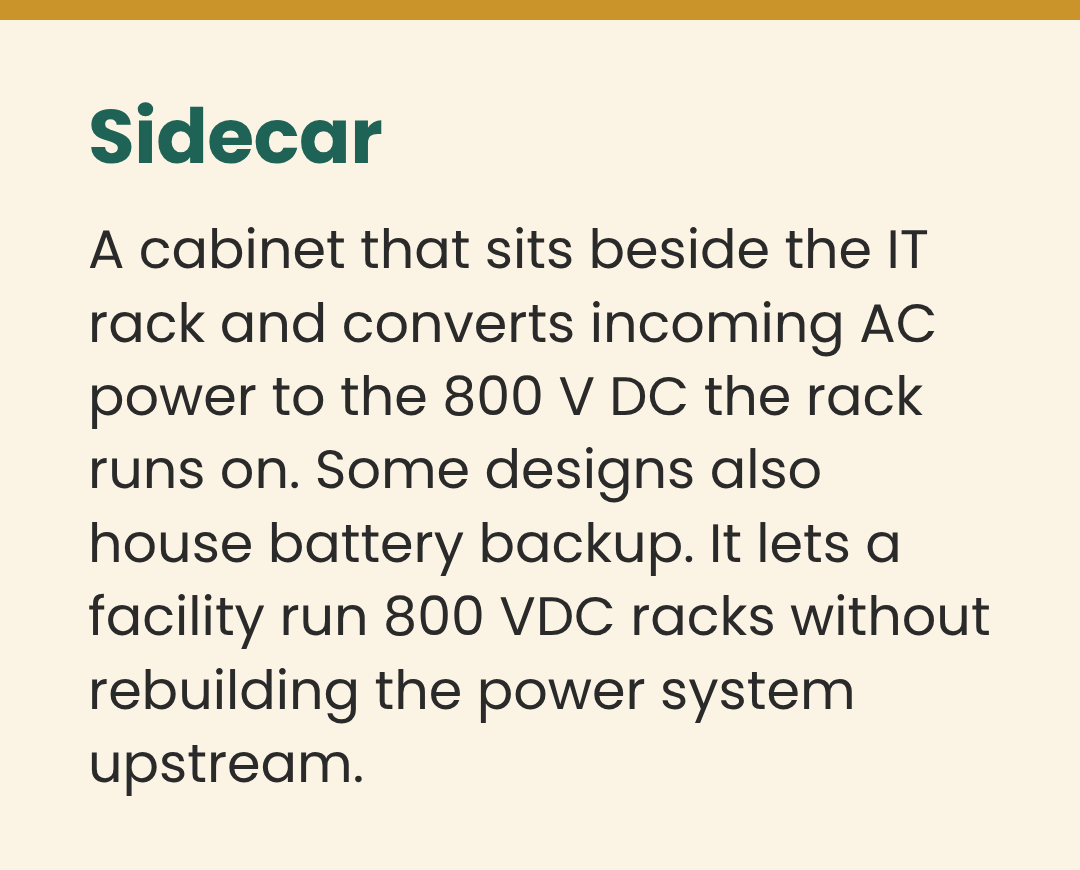
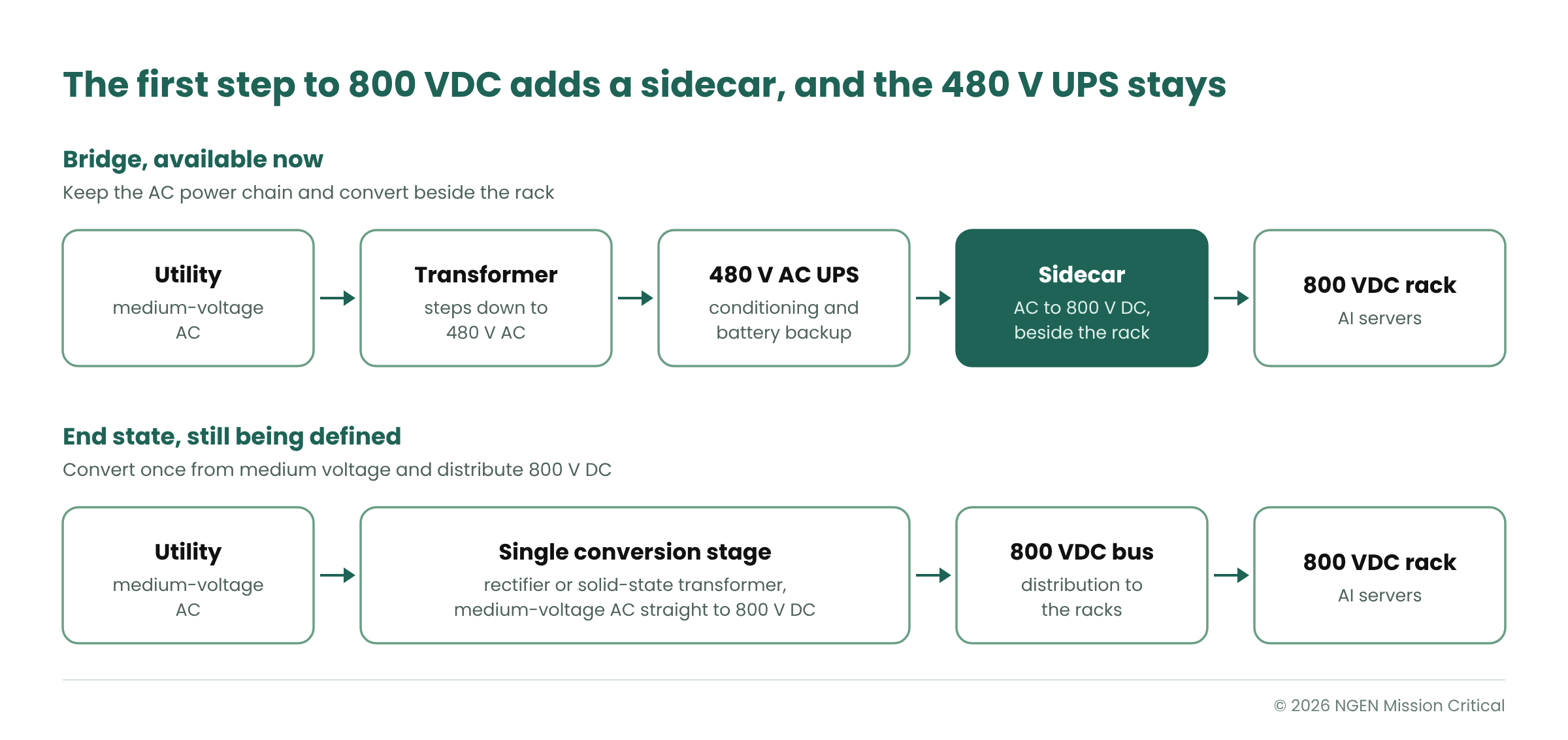
Antonio: One way is to keep the AC UPS and put a sidecar next to the rack, or 'power rack’ as some manufacturers call it. The terminology around 800 VDC isn't standardized yet, and that doesn't help anybody. The sidecar keeps most of your existing architecture in place, which matters if you're retrofitting a data center for AI loads, or already have equipment on the way. If you're designing around 800 VDC racks from the start, another option is to look at alternatives to the AC UPS itself. A DC UPS, rectifier, or solid-state transformer, are some of the possible solutions to incorporate the 800 VDC architecture in a more streamlined fashion.
Anderson: So the 480 V UPS stays relevant, and this isn't a complete swap of the system. When do we actually see 800 VDC deployed? This is your crystal ball moment.
Antonio: What's interesting is that it has already been deployed, just not in the U.S. It's in use in China, so this isn't science fiction, but a real technology. In the U.S., the first racks designed for an 800 VDC architecture are due in 2027. Exactly how the rest of the architecture changes around them is certainly still an open question.
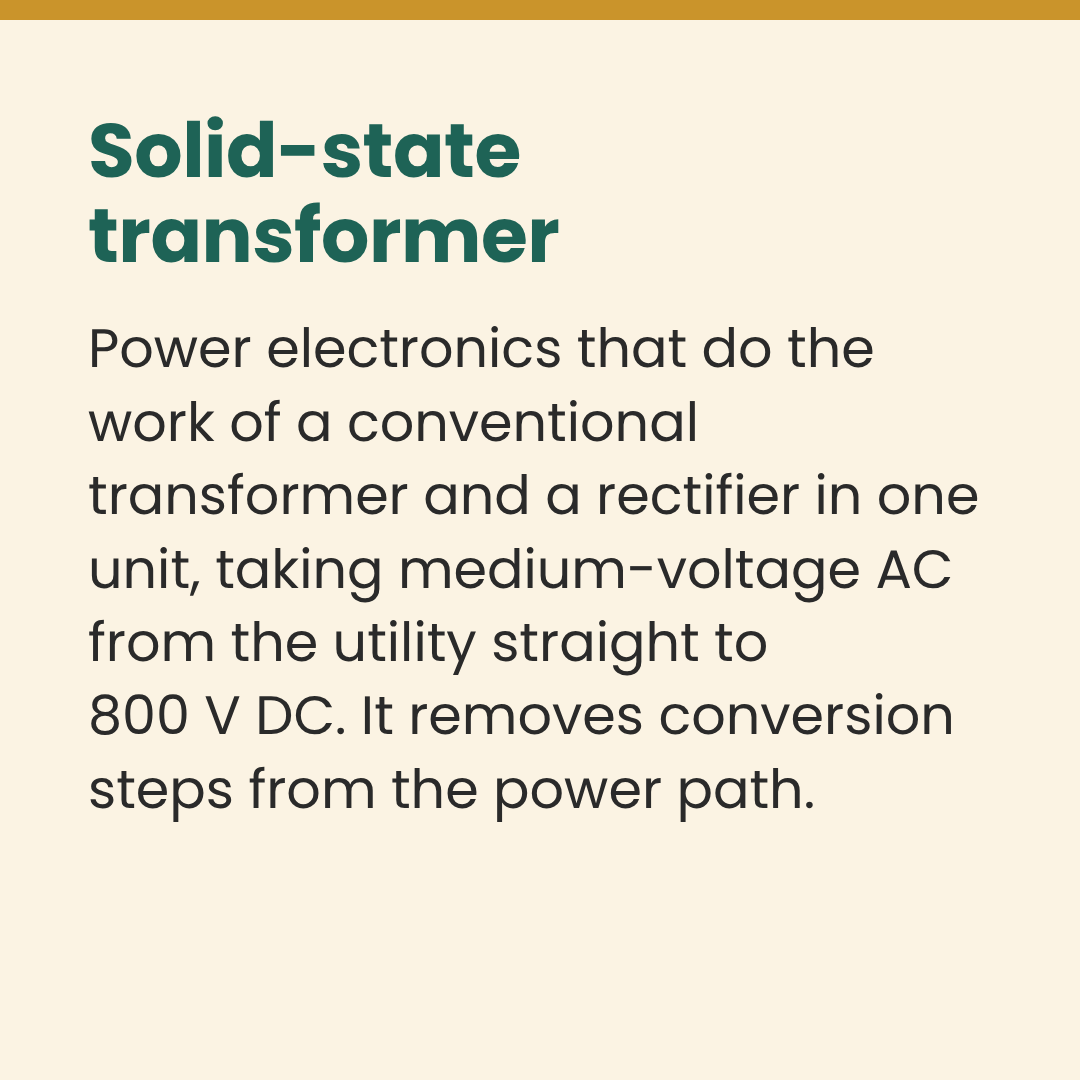
Anderson: And how about the solid-state transformers that are in every future-state design diagram?
Antonio: For a U.S. build, that's the piece I'd put furthest out. We're not going all the way to a minimal architecture with a solid-state transformer in 2027, and even if you told me you were starting construction in 2028, I'd say most installations won't use one. What you'll see first are incremental changes, with the use of Medium-Voltage UPS, sidecar deployments, DC UPS and rectifiers that will build the way to the full 800 VDC architecture.
Anderson: If the 480 V UPS is going to be around for a while, what should I look for in one today, specifically for AI loads?
Antonio: AI loads are different enough that not every UPS can power them adequately. I'd look first at overload capacity and dynamic response, meaning how the UPS behaves when the load swings in milliseconds.
Anderson: What is the UPS actually doing at that moment?
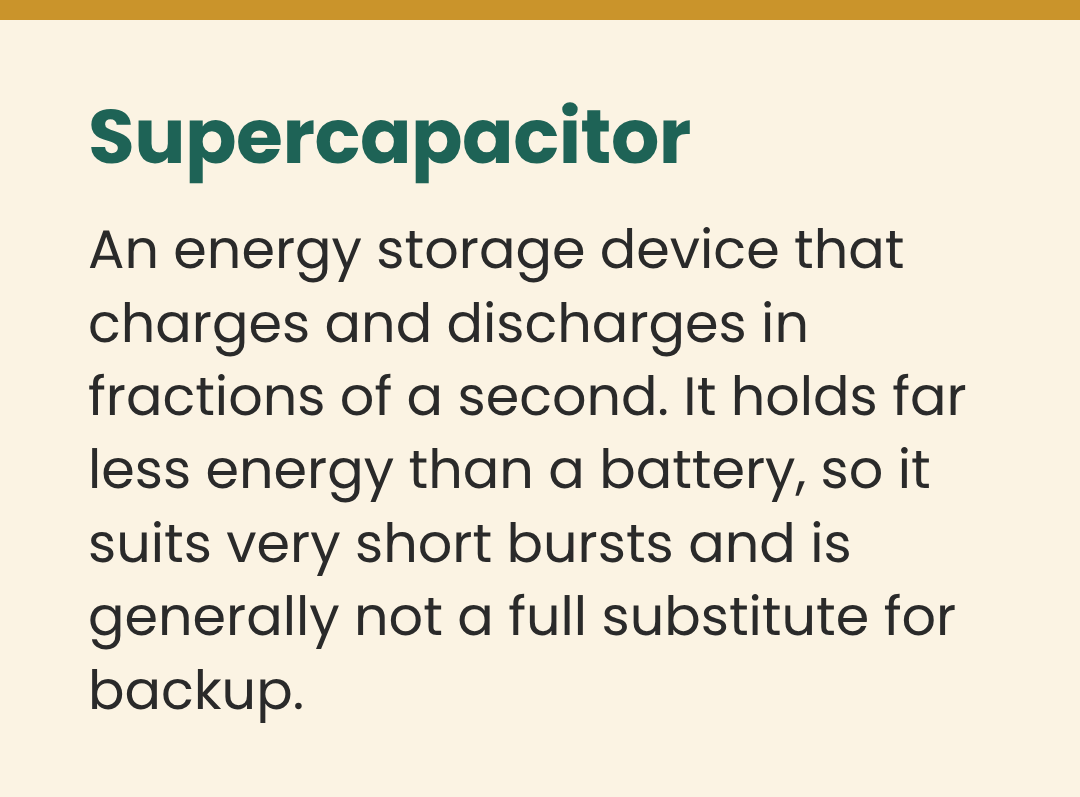
Antonio: It can use stored energy to smooth out the demand, so those rapid swings aren't reflected onto the UPS input and the rest of the electrical installation. Supercapacitors are being proposed as a complement to batteries because they discharge and recharge much faster. The technology has been around for a while, but isn’t widely used yet.
Anderson: That's how I see it playing out too, especially with lithium-ion batteries available for the UPS. Anything else on the checklist?
Antonio: If the UPS is going into a prefab module, a compact footprint and the temperatures it can operate in are important considerations. Also, reliability of the system in general, which includes how quickly the equipment can be serviced.
Anderson: Last one, and we'll ask it of everyone in this series. What's one question you wish more buyers asked you?
Antonio: "What happens when it fails?" I think of a UPS as something people want to buy and forget, like insurance, where it sits there and you hope it never needs attention. So, you need reliable equipment and a partner who can solve things quickly when something does go wrong, because if the UPS goes down, everything stops or is left unprotected from grid issues.
Key Takeaways
Building now: an AC UPS is still the right choice, and a sidecar or rectifier can feed 800 VDC racks from it.
Designing for 2028: weigh 800 VDC architectures now.
For AI loads: check overload capacity, dynamic response, and how quickly the unit can be serviced.
Specifying a UPS for an AI data center? Talk to NGEN's product team at solutions@ngen-mc.com, or view our technical specs overview