
The Cost of Downtime: Valuing Accountability
By Mark Strine
Mark Strine is the Director of Field Operations at NGEN, bringing over 13 years of experience as an O&M leader in deployed environments, from nuclear submarines to on-site power generation.
In the critical infrastructure business, the true cost of downtime is higher than many people think. In Uptime Institute's 2026 Annual Outage Analysis, one in five operators said their most recent impactful outage cost more than $1 million, and power remains the leading cause, with UPS systems, transfer switches, and generators identified as the dominant failure points. Establishing a field services plan is core to deployment risk management, commissioning success, and long-term operational continuity when building AI factories, utility-scale power systems, and other mission-critical infrastructure. Every manufacturing, sales, and distribution model carries trade-offs, and how field service is handled is one of the most consequential.
Service models typically fall into one of three categories: 1) full vertical OEM integration, 2) authorized sales and service-partner networks, or 3) international and local resellers. The differences in service availability and quality within each of these models vary drastically and can be easy to overlook when developers are racing to establish infrastructure. But they often become painfully visible during commissioning, warranty events, preventive maintenance, or outages.
Operators should understand the differences between each model so they can minimize risk by assessing service providers on the level of accountability they offer, including response time, documentation integrity, spare parts availability, and their structural ability to meet service level agreements (SLAs).
After all, not all infrastructure assets carry the same service risk. Certain types of mission-critical infrastructure equipment, such as transformers and some switchgear, are less complex to maintain. Others, such as UPS, chillers, heat exchangers, and sensor-driven cooling equipment, require larger inventories of spare parts, frequent maintenance, deeper technical expertise, and faster remediation.

The Accountability Gap
One size does not fit all across these service models. For example, an international distributor or exporter model is often transactional by nature, focusing on supplying equipment, but not on factors like logistics, commissioning, or maintenance in real-world environments. Often, these overseas manufacturers are several time zones away, may pose language barriers, and only offer remote troubleshooting. This is far from ideal when an infrastructure operator faces a critical event where every hour of delay carries operational and financial consequences.
Uptime identifies this as an industry-wide trend. Equipment shortages have pushed some operators to source substitute components from suppliers "without a proven data center track record," a practice Uptime believes has contributed to failures at multiple facilities.
The NGEN team has no shortage of firsthand stories that inform our understanding of what not to do. The details vary, but the themes are consistent:
A commissioning engineer arrives on site, sent by the supplier, but their visa prohibits them from physically touching any of the equipment. They can only observe.
A sale closes and communication with the vendor effectively goes silent. Commissioning teams try to plan, but they’re bottlenecked without proper installation manuals.
Inaccurate logistics documents lead to a big surprise, requiring an on-site, same-day environmental risk mitigation scramble to honor operational commitments.
New safety compliance requirements call for detailed wiring diagrams, but the OEM has none. A third party is engaged at a cost of tens of thousands to fill the gap after the equipment is already on site, tracing the machine wire by wire.
A specification for a custom piece of equipment takes over two months of weekly meetings to finalize due to international translation friction. The same scope of work took one week with a domestic partner.
None of these are unusual situations. These are the downstream costs of models that prioritize the transaction, not the ongoing relationship.
Still, customers may gravitate toward these models in pursuit of faster delivery, but that speed can come with significant short and long-term risk. Unclear accountability from delivery to commissioning and warranty can force a customer to troubleshoot issues in a vacuum. The NGEN model equips all technicians with the tools they need for success in the field: installation manuals, spare parts, robust documentation, and technical support.
With so many elements to consider, what should one look for when assessing the field services aspect of an equipment purchase? As complexity increases, so does the value of a trusted critical infrastructure partner with a single-accountability service model.
The NGEN Platform: Built for End-to-End Accountability
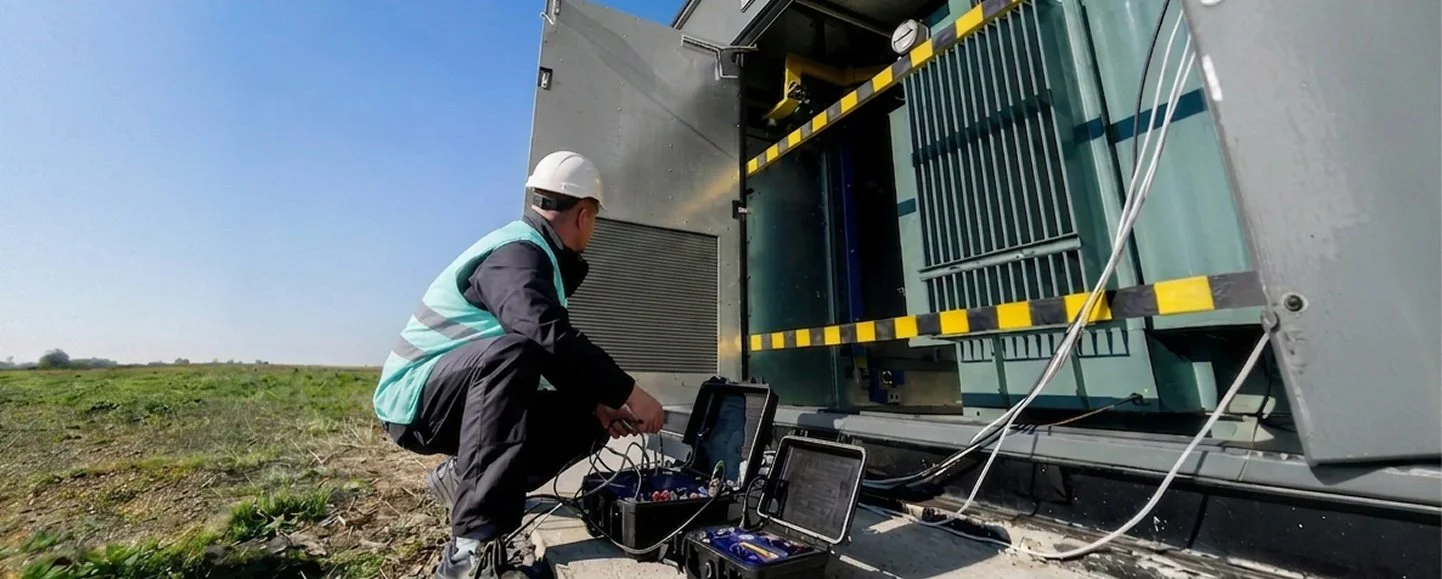
The NGEN platform fills these gaps, providing lifecycle support and accountability from design and certification alignment through commissioning and after-sales. While other models offer limited field service accountability, leaving service coordination to the customer, our field services program pairs NGEN engineering expertise with a vetted national network of certified service partners, delivering support through a single accountability platform. Our Project Delivery and Field Operations teams only work with partners we are willing to stake our name on, chosen for their NETA-certified capabilities, mission-critical experience, and national reach. They are established experts with decades of experience building and maintaining mission-critical infrastructure; they did not just show up with the AI boom.
Every NGEN order includes two foundational services. We witness Factory Acceptance Testing at the manufacturing facility prior to shipment, and we deliver a complete documentation package covering installation, operations, and service manuals, preventive maintenance schedules tailored to the equipment, FAT reports, a recommended spare parts inventory, and training materials for the O&M team. From there, customers configure additional services around their own operational model and capital priorities, from installation verification, component startup, and integrated systems testing to full facility and operational readiness support. Ongoing O&M, preventive maintenance, emergency response, warranty and spare parts, local staging for inspection, and just-in-time delivery are all available wherever our customers operate.
Documentation integrity is central to this model. Uptime found that 92% of operators said human error contributed to their most recent impactful outage, and failure to follow established procedures was the most commonly cited form, chosen by 59% of respondents, followed by incorrect staff processes and procedures at 36%. Both depend on the documentation available to teams on the ground. Where other models leave inconsistent or nonexistent documentation, creating certification gaps and unplanned maintenance and labor, we provide robust documentation at every stage of the lifecycle, along with advance notice of upcoming discontinuations.
This platform makes a difference when it counts. On the ground experts are available when they’re needed, and the foundational requirements for new infrastructure are met on every order, rather than left to the customer to figure out on their own. This is full-lifecycle accountability.

The Speed to Delivery and Speed to Uptime Equation
As deployment timelines compress and market pressures intensify, some companies may opt for providers that offer lower upfront costs or a seemingly faster path to delivery. By cutting corners throughout the rest of the lifecycle, companies expose themselves to higher risk, delayed commissioning, and slower remediation, translating to downtime, lost revenue, and more complex operations. NGEN’s service platform significantly reduces long-term deployment risk, operating as a single partner and point of ownership across the entire product lifecycle.
We minimize the hidden bottlenecks that often pop up in other approaches because we don’t just help customers buy equipment; we fully support deployment and maintenance. In mission-critical facilities, your chosen infrastructure partner determines more than just the equipment you receive; they dictate the energization schedule, long-term uptime, service continuity, and ultimately your competitive advantage.
Interested in NGEN’s custom OFCI equipment? Check out our Technical Specs Overview